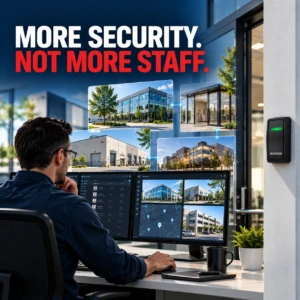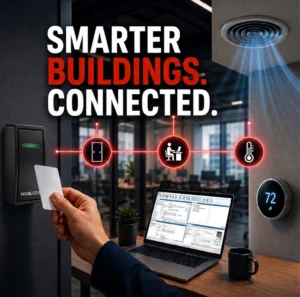
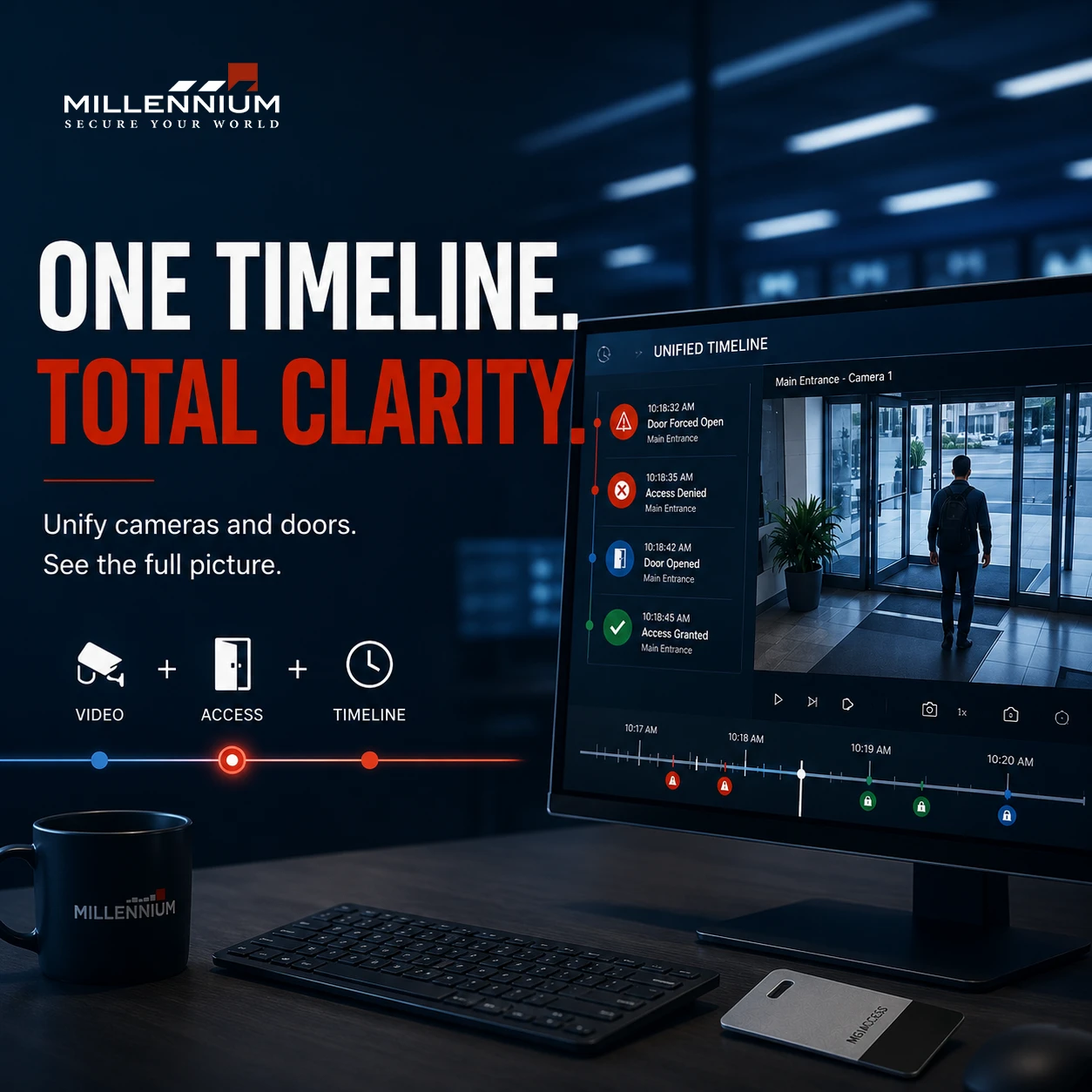
When cameras, doors, and access events live in separate systems, your security team is forced to reconstruct incidents the hard way. Operators jump between platforms, match timestamps manually, and try to piece together what happened before, during, and after an event.
That fragmentation slows investigations and creates blind spots for IT, facilities, and security operations. Video convergence solves that problem by bringing video surveillance, access control integration, and event context into one operational timeline. Open standards such as ONVIF explicitly support integration between physical access control systems and video surveillance systems, which is why unified workflows have become such a practical enterprise requirement. (onvif.org)
What Is Video Convergence?
Video convergence is the alignment of camera footage, door events, and related security data into a single investigation workflow.
Instead of treating the video management system and the access control platform as separate tools, convergence lets operators move from a door event to the relevant camera view without losing context. That is the core value of a unified security timeline: one sequence of evidence, not multiple disconnected logs. ONVIF’s access control specifications are designed to enable integration with video cameras and video monitoring systems, which supports this kind of workflow. (onvif.org)
For enterprise buyers, that usually maps to these high-intent search themes:
- unified security timeline
- video and access control integration
- camera and door event correlation
- enterprise video surveillance and access control
- incident investigation workflow
- physical security convergence
- single-pane-of-glass security operations
- access control video integration
Those phrases reflect clear search intent: buyers want fewer silos, faster investigations, and better operational control. (onvif.org)
Why Cameras and Doors Belong on the Same Timeline
Security events rarely happen in isolation.
A badge swipe, a door forced-open alert, a door held-open condition, or an after-hours entry attempt usually has a corresponding camera trail. When those records are separated, your team loses time and context. When they are unified, the team can review the door event and the relevant footage in sequence.
That matters because modern video systems increasingly support timeline-based retrieval and event reconstruction. Patent literature in this area shows long-standing industry interest in storing and retrieving video events in timeline format, with metadata used to index and search video more efficiently. (patents.google.com)
In plain terms: one timeline means faster answers.
The Operational Cost of Disconnected Systems
Disconnected systems create friction in three places.
1. Investigations take longer
If an operator has to open one interface for video and another for access events, every incident becomes a manual reconciliation exercise. That is exactly the kind of workflow unified systems are meant to reduce. Timeline-based retrieval and metadata-driven search are widely described in security video systems because they help users move from raw footage to relevant events faster. (patents.google.com)
2. Response depends on memory, not process
When the camera view is not automatically tied to the door event, response quality depends on whether the operator remembers which camera covers which entry point. Unified workflows reduce that dependency by placing the event and the evidence in the same view. ONVIF’s access control and video integration standards exist to support that exact type of interoperability. (onvif.org)
3. IT and facilities stay siloed
In many enterprises, IT owns identity, network governance, and infrastructure, while facilities owns the doors, readers, and physical response. Without a shared timeline, both teams see only part of the incident. This is where convergence supports a more modern cyber-physical operating model aligned with centralized control and standardized integrations. (onvif.org)
What a Unified Video and Door Timeline Should Do
A true enterprise-grade unified timeline should do more than display clips.
It should support investigation and response with capabilities like:
- video playback linked to access events
- door event correlation with nearby camera footage
- searchable timelines across multiple cameras
- floorplan or map-based context
- support for multi-site operations
- role-based permissions and auditability
- standards-based interoperability for physical security systems (onvif.org)
Some modern systems also support map-based unified timelines and multi-camera event reconstruction, which shows how the market is moving toward faster event review instead of manual scrubbing.
How to Evaluate a Unified Security Platform
Before you commit to a platform, evaluate it through the lens of operations.
Ask:
- Does it unify video and access control natively or through weak point-to-point links?
- Can operators move from a door alert to relevant footage immediately?
- Does it support multi-site administration?
- Does it align with open standards such as ONVIF for video and access control interoperability?
- Can IT govern users, credentials, and permissions cleanly?
- Can security teams use it without constant context switching? (onvif.org)
If the answer is no, you may have “integration” on paper, but not in practice.
Why This Matters for IT, Facilities, and Security Operations
For IT Directors, video convergence reduces system sprawl and supports cleaner governance across security infrastructure.
For Enterprise Facility Managers and CRE Property Managers, it improves visibility at lobbies, loading docks, parking areas, tenant entrances, and restricted zones.
For Enterprise Security Operations teams, it shortens the path from alert to action by tying the door event to the right footage in one place. That reduces the friction between detection, verification, and response. (onvif.org)
The Bottom Line
Video convergence is not just a feature. It is an operational strategy.
When your cameras and doors live on one timeline, your team spends less time reconciling systems and more time responding to events. That shift is especially valuable in enterprise environments where security, IT, and facilities all need the same truth at the same time. Standards such as ONVIF show that the industry has already moved toward interoperable integration between access control and video surveillance. (onvif.org)
If your current stack still forces your team to assemble incidents manually, it may be time to move from disconnected tools to a unified security model.
Start by mapping where your cameras and doors still operate in silos. Then design the timeline first.
Millennium is a scalable, hosted, access control platform that services any type of real estate. Our cloud-based solution allows managers and tenants to efficiently manage their physical security from anywhere while enhancing experience and driving profitability.