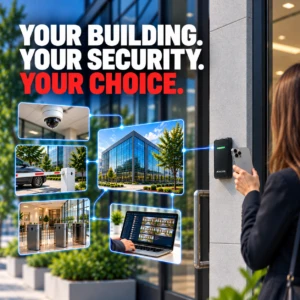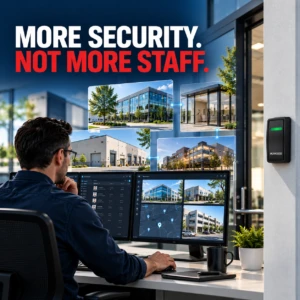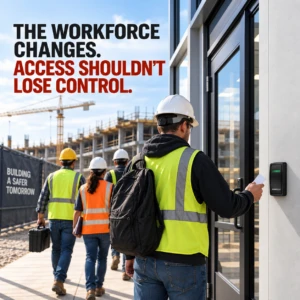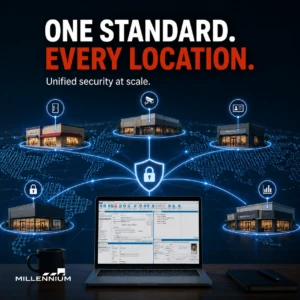
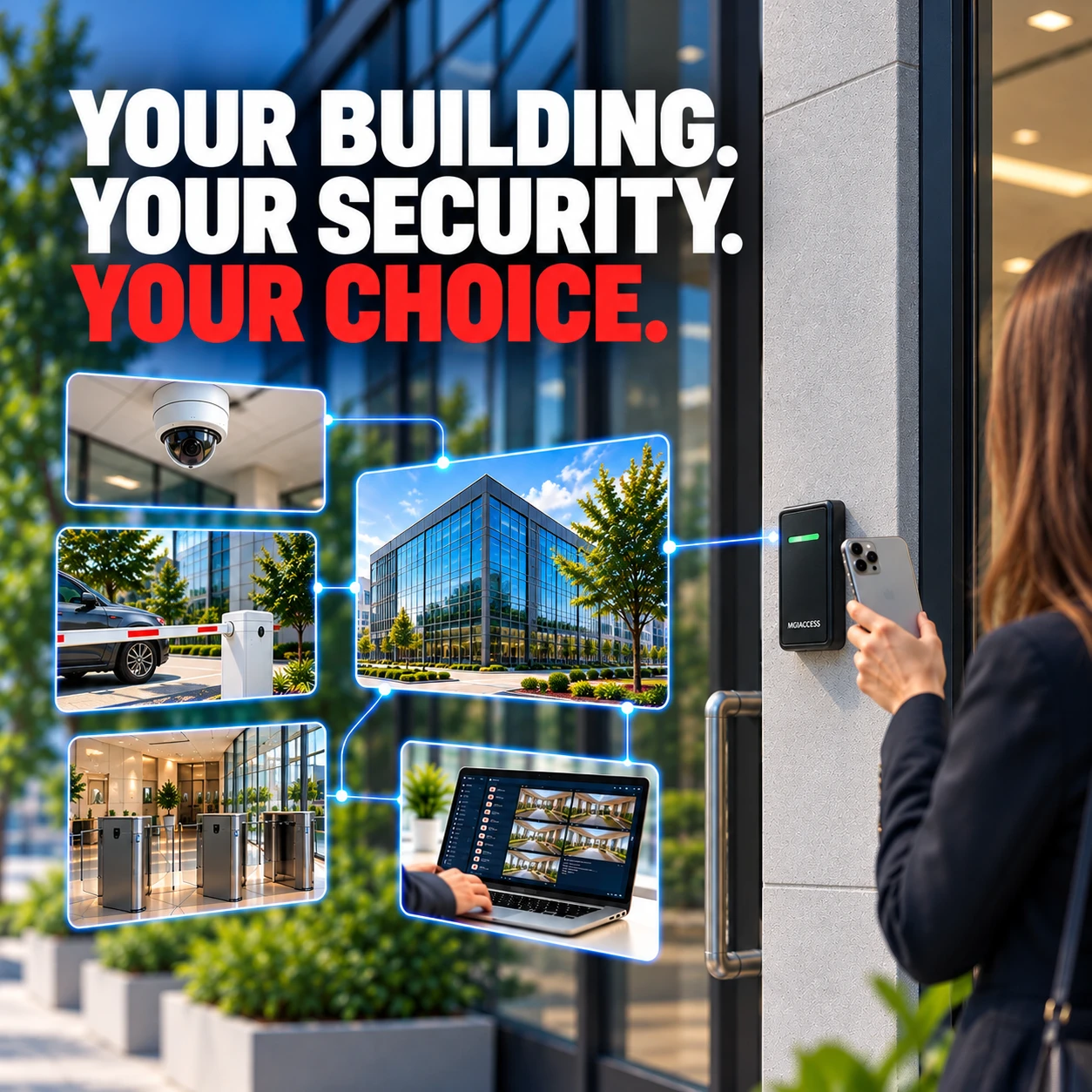
For IT Directors, enterprise facility teams, commercial property owners, CRE property managers, and security operations leaders, the “hardware trap” is familiar: a security stack that works well enough today, but only as long as you stay inside one vendor’s ecosystem.
That creates a long-term problem. Closed systems can make it harder to add new devices, integrate with existing platforms, expand across sites, or adapt to changing operational and security requirements. Open architecture takes a different approach. Instead of forcing every component to come from one manufacturer, it prioritizes interoperability, standard interfaces, and flexibility across the security ecosystem.
In commercial and enterprise environments, that difference matters. Open architecture can help reduce vendor lock-in, simplify system expansion, and support a more resilient physical security strategy. ONVIF, for example, exists to promote standardized interfaces for interoperability in IP-based physical security products and services, including access control. (onvif.org)
What Is the Hardware Trap?
The hardware trap happens when your security investment becomes tied to proprietary devices, software, licensing, and service dependencies from a single vendor.
Common symptoms include:
- Limited device compatibility
- High switching costs
- Difficult system upgrades
- Integration barriers with third-party tools
- Site-by-site inconsistency across portfolios
- Roadmaps controlled by the vendor, not your organization
In practice, the trap is rarely about one device. It is about the architecture around it. If the platform uses proprietary protocols or closed integration paths, every future change becomes more expensive and more constrained.
Why Vendor Lock-in Is a Strategic Risk
Vendor lock-in is not just a procurement issue. For enterprise security and facilities teams, it becomes an operational risk.
A locked-in environment can affect:
- Scalability: Adding doors, cameras, or buildings may require vendor-specific hardware.
- Interoperability: Legacy systems may not work well with newer platforms.
- Lifecycle management: Replacing one subsystem may force replacement of others.
- Security posture: Security teams may be stuck with outdated components longer than planned.
- Budget control: Limited competitive bidding can weaken negotiation leverage.
Open standards help reduce that risk by making it easier to mix vendors, upgrade incrementally, and preserve existing investments. ONVIF’s mission is to standardize interfaces for effective interoperability, and its specifications are designed around network communication and integration across devices and systems. (onvif.org)
How Open Architecture Changes the Equation
Open architecture is not “anything goes.” It means the system is designed around documented interfaces, standards, and interoperability.
In security environments, that often means:
- IP-based devices that can work across vendor lines
- Standardized interfaces for access control and video
- Easier integration with PSIM, VMS, BMS, or identity systems
- More flexibility in device selection
- Better future-proofing for platform changes
ONVIF’s access control specification, for example, describes interfaces that support integration of physical security equipment with other systems and explicitly notes interoperability opportunities by separating configuration from control and monitoring. (onvif.org)
Open Architecture vs. Closed Architecture
Closed architecture
A closed system may be easier to deploy at first, but it usually narrows your options later.
Typical tradeoffs:
- One-vendor device dependency
- Proprietary integrations
- Higher replacement costs
- Less flexibility in upgrades
- Potentially slower innovation adoption
Open architecture
Open architecture creates more choice and easier evolution.
Benefits include:
- Ability to source from multiple manufacturers
- Better support for phased modernization
- Reduced integration friction
- More leverage in procurement
- Easier alignment with enterprise IT standards
For organizations that manage multiple properties, open architecture is especially valuable because it helps standardize operations while still allowing local flexibility.
Why Open Standards Matter in Access Control
Access control is one of the clearest examples of where open architecture creates real value.
NIST’s FIPS 201-3 discusses technical interoperability requirements and references physical and logical access control systems in the context of authorization and identity. That reinforces a broader enterprise principle: access systems should be designed to support interoperability, not isolate it. (pages.nist.gov)
ONVIF also provides access control-related services and conformance specifications, supporting device interoperability and integration with broader security environments. (onvif.org)
For enterprise and CRE teams, that means open architecture can support:
- Mixed-device deployments
- Easier new-build and retrofit projects
- Standardized access workflows
- Better long-term maintainability
- More flexible portfolio expansion
The Business Case for Future-Proof Security Infrastructure
A future-proof security infrastructure is one that can evolve without a full rip-and-replace cycle.
That matters because commercial facilities are not static. Tenants change, buildings expand, access requirements shift, and security risks evolve. Open architecture helps teams respond to those changes with less friction.
The practical business benefits include:
- Longer usable life for infrastructure
- Easier technology refresh cycles
- Better support for phased capital planning
- Lower operational complexity across sites
- Less dependency on one vendor’s roadmap
In other words, open architecture helps security systems behave more like enterprise infrastructure and less like disposable appliances.
What IT and Facility Teams Should Evaluate
Before committing to a security platform, IT and facilities stakeholders should ask:
- What standards does the platform support?
Look for documented interoperability standards and service specifications. - How easy is third-party integration?
Determine whether the system supports APIs, standard protocols, or certified interfaces. - Can we expand without replacing the core?
A strong platform should allow phased growth. - How portable is our investment?
Evaluate what happens if you need to change vendors later. - Does the architecture align with our enterprise security model?
Network access control, identity governance, and segmentation should fit your broader IT strategy. - What is the real lifecycle cost?
Include integration, support, and replacement costs—not just initial purchase price.
Security Considerations in an Open Architecture Model
Open does not mean insecure. In enterprise security, openness must be paired with governance.
A well-designed architecture should still support:
- Strong authentication
- Role-based access control
- Encryption in transit where applicable
- Network segmentation
- Device hardening
- Auditability and logging
- Controlled vendor access
ONVIF’s specifications include security-related capabilities and support for interoperability in ways that can align with enterprise controls. Additionally, IEEE 802.1X is a standard for port-based network access control, which is often relevant in enterprise device access strategies. (onvif.org)
The key is not just openness. It is openness with controls.
How Open Architecture Supports CRE Portfolios
For commercial real estate portfolios, open architecture is especially useful because it helps balance standardization and site-specific needs.
A portfolio-wide approach can allow teams to:
- Standardize on a common architecture
- Use approved device families from multiple manufacturers
- Reduce training complexity
- Simplify support across properties
- Improve procurement flexibility
- Minimize disruption during upgrades
That is particularly valuable for properties with mixed vintages, different tenant requirements, and staggered capital replacement schedules.
The Bottom Line
The hardware trap is what happens when security architecture becomes too dependent on one vendor’s ecosystem. Open architecture is the cure because it creates interoperability, reduces vendor lock-in, and gives enterprise teams more control over how they design, expand, and modernize security infrastructure.
For IT Directors, facility managers, CRE property teams, and security operations leaders, the question is no longer whether security systems should be connected. It is whether they should be connected on your terms or the vendor’s.
Open architecture helps ensure that your security platform can adapt as your buildings, technology stack, and business requirements change.
Millennium is a scalable, hosted, access control platform that services any type of real estate. Our cloud-based solution allows managers and tenants to efficiently manage their physical security from anywhere while enhancing experience and driving profitability.