The conduit trap is a legacy problem hiding in plain sight
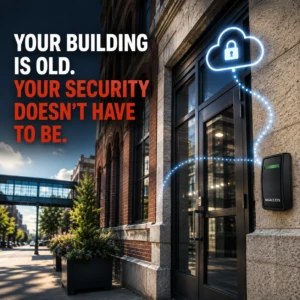
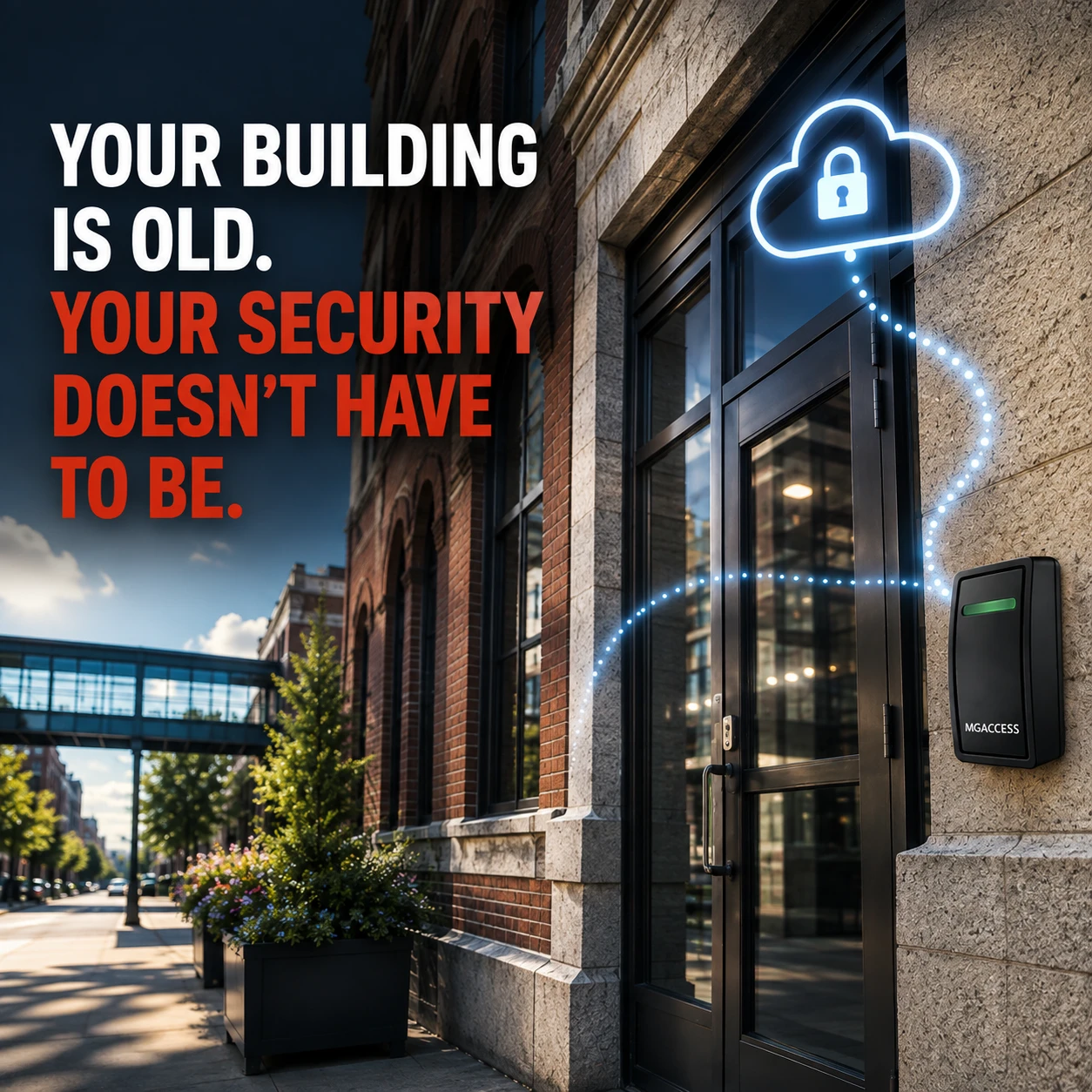
Older buildings were not designed for today’s security expectations. When property teams want to add cloud-based access control, they often run into the same obstacle: limited pathways for cabling, constrained risers, aging infrastructure, and expensive disruption. That is the conduit trap.
For IT directors, facility managers, CRE property managers, and security operations teams, the issue is bigger than a construction headache. It is a modernization bottleneck. The building may still function, but the physical infrastructure makes it hard to move to cloud-managed access, unify identities, and reduce administrative overhead.
Cloud-to-cloud access can help break that cycle by reducing dependence on new cabling runs and enabling a more flexible architecture for older buildings. In practice, this means security teams can modernize access control while working with the building they already have, rather than forcing a full rip-and-replace.
Why older buildings struggle with modern access control
Legacy buildings often present a mix of physical and operational constraints:
- limited conduit capacity
- outdated wiring paths
- aging panels and controllers
- fragmented security systems
- siloed IT and facilities ownership
- difficult tenant turnover and user provisioning
These issues are especially painful in commercial real estate and multi-tenant environments where uptime, tenant experience, and auditability matter. Older access control systems can also become integration dead ends, making it harder to connect physical security with cloud identity workflows and broader enterprise security operations.
That is why modernization is no longer just a hardware decision. It is an architecture decision.
What cloud-to-cloud access means in a legacy building context
“Cloud-to-cloud access” is best understood as a model where your access control environment can connect with cloud identity, cloud management, or cloud services without forcing every part of the building to be rebuilt.
For older buildings, the value is straightforward:
- less dependence on new conduit runs
- easier integration with identity providers and centralized admin tools
- more flexible rollout by building, floor, or tenant
- improved visibility across sites and portfolios
- better alignment with cloud-first IT governance
This approach matters because cloud-based systems are widely positioned as easier to manage remotely, while hybrid approaches can preserve control where it is needed most.
The right architecture starts with the building, not the buzzword
In older properties, the best modernization plan is usually the one that respects building constraints. A cloud-first outcome does not necessarily require a full physical rebuild. Instead, teams should evaluate:
- existing controller and reader infrastructure
- network segmentation and cybersecurity requirements
- tenant separation and permission models
- failover behavior during network outages
- integration points with identity and security platforms
- phased rollout options across occupied space
This is where Zero Trust principles become relevant. NIST describes Zero Trust Architecture as an approach that assumes no implicit trust based solely on network location or asset ownership. (nist.gov) For older buildings, that is a useful mindset: do not assume a legacy corridor, riser, or on-prem system is secure just because it has always been there.
Why protocol choice matters in older buildings
Legacy access control systems often depend on older communication methods that were not built for today’s security environment. Industry sources note that older protocols such as Wiegand are unidirectional and unencrypted, which can create security weaknesses. Gallagher also notes that modern device communications should support stronger protections and that protocols like OSDP are part of contemporary access control ecosystems.
For enterprise teams, the takeaway is simple: modernization is not only about moving software to the cloud. It is also about improving the communication layer between readers, controllers, and management systems.
How to break the conduit trap without a rip-and-replace
A practical modernization strategy for older buildings usually follows a phased model:
1. Assess the physical constraints
Map conduit availability, panel locations, cable paths, and tenant boundaries before selecting technology.
2. Identify the integration model
Determine whether the site needs fully cloud-native access, hybrid access control, or a staged migration tied to building occupancy schedules.
3. Preserve operational continuity
Choose an approach that minimizes downtime and avoids large-scale tenant disruption. Gallagher’s migration guidance emphasizes careful planning, testing, and coordination to reduce disruption during upgrades. (security.gallagher.com)
4. Prioritize interoperability
Select platforms that can work with existing systems during transition rather than forcing an all-at-once replacement.
5. Align IT and facilities ownership
Cloud-to-cloud access works best when IT, facilities, and security operations share a common migration plan and governance model.
The business value for enterprise and CRE teams
For commercial property owners and CRE managers, the advantage goes beyond convenience. A better access control architecture can support:
- faster tenant onboarding and offboarding
- centralized oversight across multiple properties
- easier policy enforcement
- clearer audit trails and reporting
- reduced reliance on physical key management
- improved alignment between cyber and physical security teams
For enterprise security operations, the value is similarly strategic: cloud-connected access control can reduce blind spots and support a more unified security posture. That aligns with the broader industry movement toward integrated, cloud-enabled security management.
Cloud-to-cloud access is not just for new buildings
One of the biggest misconceptions in the market is that cloud access control only makes sense in modern, ground-up construction. In reality, older buildings may benefit even more because they are the ones most constrained by infrastructure.
If you manage a legacy property, the right question is not “Can we rebuild the building?” It is “How do we modernize securely, with minimal disruption, and without trapping ourselves in the conduit problem?”
That is the core promise of cloud-to-cloud access: it helps older buildings join a modern security architecture without waiting for a full renovation cycle.
Where Millennium fits
For organizations navigating legacy infrastructure, the goal is to bridge the gap between the building you have and the secure, cloud-connected environment you want. Millennium Ultra and the broader Millennium Group approach are designed to help enterprise teams modernize access control in a way that is practical, security-minded, and built for real-world property constraints.
If your portfolio includes older buildings, cloud-to-cloud access may be the path that finally breaks the conduit trap.
Conclusion: modernize the architecture, not just the software
Older buildings do not need to remain stuck with legacy access control. With the right strategy, cloud-to-cloud access can unlock modernization without forcing a disruptive rebuild.
The winning formula is clear:
- respect the building’s constraints
- reduce dependence on new conduit
- align with Zero Trust principles
- prioritize secure protocols and interoperability
- plan a phased migration that protects operations
For IT directors, facility leaders, property owners, and security teams, that is the path from legacy friction to modern control.
Millennium is a scalable, hosted, access control platform that services any type of real estate. Our cloud-based solution allows managers and tenants to efficiently manage their physical security from anywhere while enhancing experience and driving profitability.