
The Zero-Infrastructure Job Site: Securing the Rotating Workforce
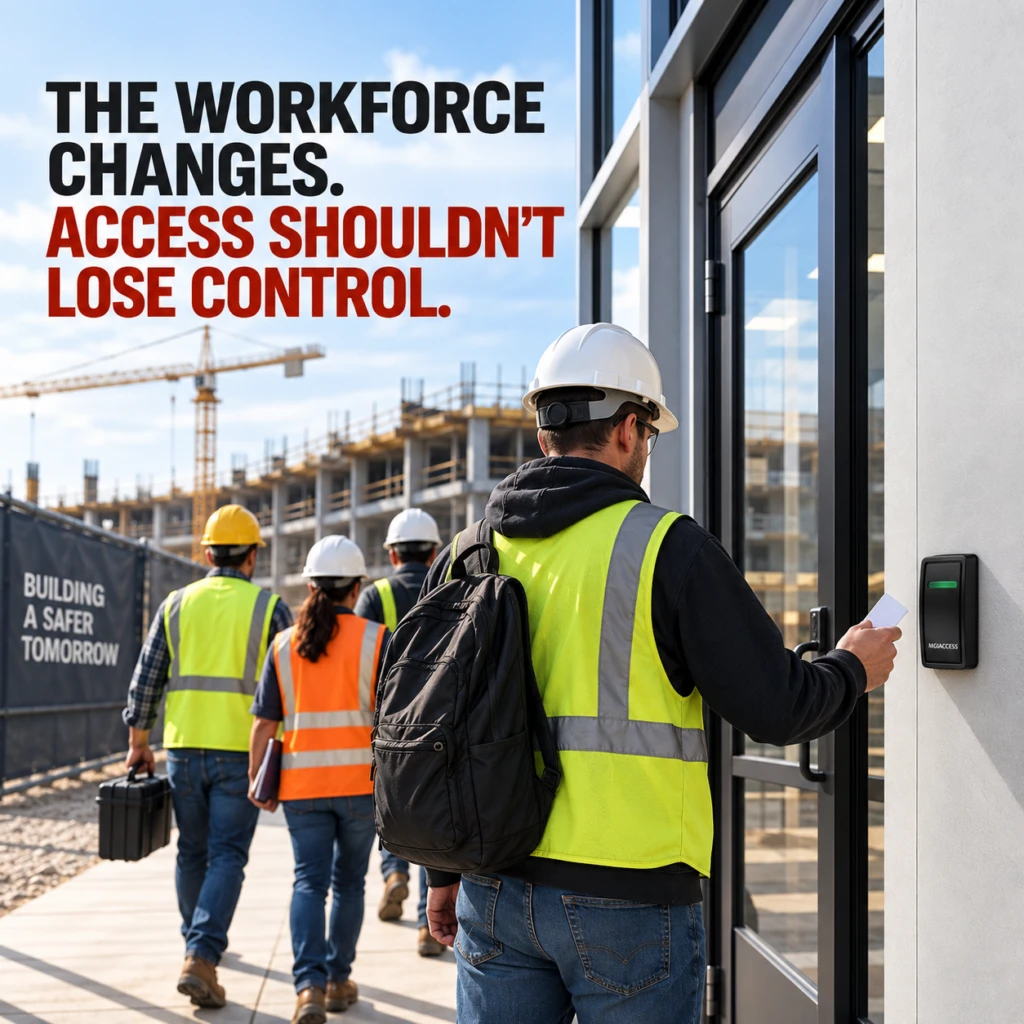
Commercial properties, enterprise facilities, and job sites increasingly depend on rotating workforces: contractors, vendors, service teams, temporary staff, and after-hours maintenance crews. That creates a simple but difficult problem: how do you secure people who move frequently, need time-bound access, and may not return to the same site tomorrow? The answer is not more keys, spreadsheets, or ad hoc door codes. For many organizations, the better model is a zero-infrastructure job site—a security approach that reduces on-site hardware dependence, centralizes identity-based access decisions, and supports rapid onboarding and offboarding for changing teams. This article explains how IT Directors, Facility Managers, CRE Property Managers, Property Owners, and Security Operations teams can secure a rotating workforce using modern access control, visitor and contractor management, and Zero Trust security principles. What “Zero-Infrastructure Job Site” Means A zero-infrastructure job site is not a site with no security. It is a site that minimizes the need for heavy, locally managed access infrastructure while still enforcing strong control over who can enter, when they can enter, and what they can access. In practice, that usually means: Identity-based access instead of static credentials Cloud-managed or centrally managed access control Mobile credentials or temporary credentials Time-bound permissions for contractors and vendors Continuous logging and auditability Integration with HR, vendor, and visitor workflows This aligns with Zero Trust guidance that emphasizes verifying identity explicitly, applying least privilege, and assuming breach. Microsoft’s Zero Trust guidance also notes that network firewalls and VPNs alone are no longer sufficient for modern access patterns. Why Rotating Workforces Create Security Risk Rotating workforces are operationally necessary, but they create predictable access challenges: Credentials are issued and revoked too slowly Shared door codes get reused Temporary workers accumulate unnecessary access Contractors need access to different zones on different days Facility teams lose visibility into who is on-site Offboarding becomes inconsistent across departments For physical security, the main issue is that access must be tied to the person, the role, and the time window—not to a permanent badge floating around a job site. Modern physical access control systems are designed to admit only authorized people through secured entry points and to log access for audit purposes. The Core Security Principles Behind a Zero-Infrastructure Job Site Verify identity before granting access Zero Trust frameworks recommend explicit verification of users and devices before access is allowed. Microsoft’s guidance describes verifying identities, checking device health, and applying real-time policies as core Zero Trust practices. Grant the minimum access needed Contractors should receive only the access required for their assignment. Microsoft’s Zero Trust guidance explicitly recommends least privilege access and just-in-time access for sensitive functions. Assume the site boundary is not enough A rotating workforce may be accessing the site from many entry points, devices, and vendors. Zero Trust shifts the security model away from perimeter dependence and toward continuous validation and policy enforcement. Log, review, and audit access Physical access systems should record ingress and egress, support audit trails, and integrate with security operations workflows. Microsoft’s datacenter security guidance describes electronically logged access and monitored physical access as standard controls. The Best Security Model for a Rotating Workforce A strong model for a rotating workforce usually combines five elements: Identity proofing Role-based access assignment Time-based credential expiration Centralized logging Fast offboarding This is where cloud-managed access systems and Zero Trust policy models are especially useful. Microsoft’s Zero Trust documentation emphasizes policy-based access, device validation, and least privilege. Google’s BeyondCorp model similarly highlights identity and device-aware access without relying on traditional network trust. Mobile Credentials and Temporary Access Are Better Than Shared Codes For job sites with rotating crews, mobile credentials and temporary access badges are often a better fit than shared PINs or printed codes. Why? Credentials can be issued remotely Access can expire automatically Credentials can be tied to a named user Revocation is faster Audit trails are cleaner Physical access control guidance from industry vendors and security platforms consistently frames modern PACS as identity-centered systems that can log and manage authorized entry. For property managers and security teams, this reduces the operational burden of rekeying or manually resetting access every time a vendor rotates off site. Contractor Access Control Needs Time Boundaries Contractors are not employees, and they should not be treated like permanent insiders. A strong contractor access control process should define: Who approved the request What site or zone they can enter When access starts and ends Which doors, floors, or areas are included Whether escort is required How access is revoked after the job ends Microsoft’s privileged access guidance reinforces the principle that access should be granted only at the right time, with the right approval workflow, and at an acceptable risk level. For CRE and enterprise facilities, this is especially important in mixed-use buildings, tenant floors, loading docks, equipment rooms, and after-hours maintenance environments. Visitor Management and Contractor Management Should Work Together Many organizations treat visitor management and contractor management as separate workflows. That creates gaps. A better model is a unified access workflow that can handle: Visitors Vendors Short-term contractors Cleaning crews HVAC and maintenance providers Emergency service personnel A unified system improves visibility and reduces the risk of manual exceptions. It also helps Security Operations teams answer the question, “Who is on site right now, and why?” without relying on paper logs or disconnected systems. How to Secure a Zero-Infrastructure Job Site Without Heavy On-Site Hardware A true zero-infrastructure approach reduces local complexity while keeping security strong. Common elements include: Cloud-managed access control Central administration makes it easier to manage multi-site properties, temporary workers, and offboarding. Identity and directory integration Tie access to an employee or contractor identity record so permissions are easier to update and revoke. Role-based access control Assign access based on job role, project, or vendor status rather than personal familiarity. Time-boxed credentials Set start and end dates automatically to limit exposure. Central logging and alerts Monitor use patterns, after-hours access, and unusual door activity. Policy-based device validation Where applicable, require managed devices or trusted authentication paths