Subscription-Based Access Control: A Smarter Fit for Annual Budget Cycles

Annual budgeting is one of the most critical — and often stressful — processes for organizations. Whether it’s corporate offices, multi-site enterprises, educational institutions, or healthcare facilities, aligning security investments with predictable budget cycles has become a top priority. Traditional access control systems, built around large upfront capital expenses, often clash with how modern organizations plan and allocate funds. This is where subscription-based access control emerges as a smarter, more flexible alternative. As organizations move toward operational efficiency, predictable costs, and scalable infrastructure, subscription-based access control models are redefining how access control systems are planned, deployed, and managed. Instead of large one-time investments that strain annual budgets, subscription-based models offer cost alignment, financial clarity, and long-term adaptability — all essential for today’s dynamic security needs. This article explores why subscription-based access control fits annual budget cycles better, how it supports financial planning, and why more organizations are moving away from traditional capital-heavy security systems. Understanding the Challenge with Traditional Access Control Budgeting Traditional access control systems typically require significant upfront investments. Hardware purchases, licensing fees, installation costs, and ongoing maintenance contracts are often bundled into a single large capital expenditure. While this model worked in the past, it poses several challenges for modern organizations. Annual budgets are usually planned months in advance, with strict limits on capital expenditures. A sudden need to upgrade access control infrastructure — whether due to expansion, compliance requirements, or security risks — can disrupt financial planning. These systems also lack flexibility; scaling up often requires additional capital approvals, which can delay security improvements. In contrast, subscription-based access control shifts spending from CapEx to OpEx, allowing organizations to plan security expenses more predictably within annual budget cycles. What Is Subscription-Based Access Control? Subscription based access control is a model where organizations pay a recurring fee — monthly or annually — for access control systems instead of purchasing everything upfront. This fee typically covers software licensing, cloud management platforms, updates, support, and sometimes even hardware through bundled offerings. Unlike traditional systems that require replacement or costly upgrades every few years, subscription-based access control evolves continuously. Updates, security patches, and feature enhancements are included, reducing unexpected costs and eliminating the need for large reinvestments. This model aligns closely with how organizations now budget for IT, SaaS platforms, and managed services — making it a natural fit for modern access control systems. Why Annual Budget Cycles Favor Subscription Models 1. Predictable and Forecastable Security Spending One of the biggest advantages of subscription-based access control is cost predictability. Annual budgets thrive on consistency. When finance teams know exactly how much will be spent on access control each year, forecasting becomes easier and more accurate. Instead of allocating a large lump sum every few years, organizations can distribute costs evenly. This eliminates budget spikes and allows security investments to coexist smoothly with other operational priorities. 2. Easier Budget Approval and Faster Decision-Making Capital expenses often require multiple levels of approval, extended justification, and long review cycles. Subscription based access control, categorized as an operational expense, usually faces fewer internal hurdles. This accelerates decision-making, enabling organizations to deploy or upgrade access control systems when needed — not when budgets finally allow it. Faster approvals mean faster risk mitigation and improved security posture. 3. Better Alignment with IT and Digital Transformation Budgets Modern organizations increasingly allocate budgets toward cloud services, SaaS platforms, and managed solutions. Subscription based access control fits seamlessly into this ecosystem. Security leaders can bundle access control costs alongside other recurring technology expenses, creating a unified, scalable digital infrastructure. This alignment simplifies budget planning and supports long-term transformation strategies. Scalability Without Budget Disruption Organizational needs change constantly — new offices open, teams grow, and access requirements evolve. Traditional access control systems struggle to adapt without additional capital investments. With subscription-based access control, scaling is built into the model. Adding users, doors, or locations typically involves adjusting the subscription tier rather than renegotiating hardware purchases or installation contracts. This flexibility ensures that security scales with the organization without derailing annual budgets. Reduced Risk of Obsolete Systems One of the hidden costs of traditional access control systems is obsolescence. Technology evolves rapidly, and systems purchased today may become outdated within a few years. Subscription based access control mitigates this risk by providing continuous updates and enhancements. Organizations no longer need to plan for large replacement budgets — the system evolves as part of the subscription, ensuring long-term value and relevance. Improved Financial Transparency for Stakeholders CFOs, finance teams, and procurement leaders value transparency. Subscription based access control provides clear, recurring cost structures that are easy to track and audit. This transparency improves collaboration between security, IT, and finance teams. Everyone understands the cost implications, making it easier to justify investments and align security goals with broader business objectives. Supporting Compliance and Security Standards Year After Year Regulatory requirements and security standards are constantly changing. Meeting these requirements often requires system updates, reporting capabilities, and audit-ready features. Subscription based access control ensures that compliance-related updates are included as part of the service. Organizations don’t need to allocate additional budget each time regulations change — compliance becomes an ongoing, manageable process within the annual budget framework. Lower Total Cost of Ownership Over Time While traditional systems may appear cheaper initially, their long-term costs often tell a different story. Maintenance, upgrades, support contracts, and eventual replacements add up over time. Subscription based access control spreads these costs evenly, often resulting in a lower total cost of ownership. Organizations gain access to modern access control systems without the financial burden of repeated capital investments. Download the Cloud Access Control Checklist your 15-step, printable guide to building a secure, scalable, and cloud-ready system. Includes: PoLP setup, MFA guide, permission audit worksheet + a bonus printable template. Click Here Operational Efficiency for Security Teams Security teams benefit significantly from subscription-based access control. Centralized management platforms, remote administration, and automated updates reduce manual effort and operational overhead. This efficiency translates into cost savings that align well with annual
How to Budget for Access Control in 2026 Without Overspending

In 2026, security expectations are higher than ever, and facilities of all sizes are being pushed to modernize their access control strategies. But while the benefits of next-generation systems are clear—remote management, cloud connectivity, mobile credentials—the budgeting process can be anything but straightforward. For property managers, IT directors, and operations teams, setting an accurate and sustainable access control budget is key to avoiding overspending while still investing in the right solutions. In this guide, we’ll explore practical ways to budget for your access control system in 2026 without compromising on security or scalability. Why Your 2026 Access Control Budget Needs an Update The landscape of physical security is evolving quickly. Traditional lock-and-key systems are being replaced by cloud-based access control solutions that integrate seamlessly with other building technologies. This evolution brings new opportunities—and new budget considerations. According to a recent study by IDC, nearly 40% of businesses have already adopted cloud-based access control, with that number expected to grow rapidly as organizations prioritize flexibility and remote management【13†source】. If your current budget model only accounts for hardware upgrades or one-time capital expenditures, it may not reflect the recurring subscription fees, software updates, or integration costs that are common with modern systems. Step 1: Start With Your Access Control Goals Before you start pricing hardware or software, define your top security priorities: Do you need to manage multiple buildings remotely? Are mobile credentials important for your tenants or staff? Do you want to integrate with CCTV, HVAC, or identity platforms? Are you preparing for regulatory audits or compliance needs? Answering these questions helps determine the scope of your access control system and guides your cost planning accordingly. Step 2: Understand Total Access Control Cost (TCO) Access control cost goes beyond readers and door hardware. A full Total Cost of Ownership (TCO) model should include: Initial hardware (readers, controllers, wiring, locks) Software licensing or subscriptions Cloud hosting or on-premise server costs Mobile credentials or key fobs Installation and setup labor Training for users and administrators Ongoing maintenance and support Cloud-based systems often reduce upfront costs by removing the need for dedicated servers and costly maintenance, but they shift expenses to predictable monthly or annual subscriptions【13†source】. Step 3: Plan for Scalability and Future-Proofing One of the biggest hidden costs in security is ripping out and replacing outdated systems. Instead, look for solutions that scale with your property and can adapt to new technologies. Cloud-native platforms like Millennium Ultra are built for scalability. They support remote management, mobile access, and integrations with third-party tools—without requiring hardware overhauls. A forward-thinking access control budget should allow for: Adding new doors or locations easily Upgrading firmware and software remotely Supporting new access methods (e.g., biometrics, mobile) Compliance updates as regulations evolve【12†source】 Step 4: Build a Phased Budget Plan Not every upgrade needs to happen all at once. In fact, many successful teams build their access control systems in phases: Phase 1: Upgrade high-priority doors (server rooms, main entries) Phase 2: Expand to secondary areas and staff-only zones Phase 3: Integrate cloud management and mobile access features Phase 4: Sync with other building systems (e.g., HR, elevators, HVAC) Breaking your access control budget into phases allows for greater flexibility and ensures you don’t overspend upfront. Download the Cloud Access Control Checklist your 15-step, printable guide to building a secure, scalable, and cloud-ready system. Includes: PoLP setup, MFA guide, permission audit worksheet + a bonus printable template. Click Here Step 5: Compare Cloud vs. On-Premise Options Each model has unique budgeting needs: Cloud-Based Access Control: Lower upfront hardware costs Subscription-based pricing Includes software updates and remote management Scales easily with business growth On-Premise Access Control: Higher initial costs (servers, hardware) No recurring fees, but higher maintenance Requires internal IT resources for updates In many cases, cloud-based systems provide a better long-term value, especially for growing or distributed organizations【13†source】. Step 6: Account for Training and Change Management Even the best access control system can fail if users aren’t trained properly. Your budget should include line items for: Administrator training sessions User onboarding materials Policy documentation System health checks and audits【10†source】 This upfront investment reduces future costs tied to human error, security breaches, or inefficient system use. Step 7: Review Compliance and Risk Mitigation Needs Are you in a regulated industry? Your access control system may need to support specific features like: Detailed audit logs Restricted area tracking Multi-factor authentication (MFA) Integration with compliance platforms These features impact your access control cost, but also protect your organization from fines, legal action, and reputational damage【12†source】. Final Thoughts: Spend Smarter, Not Less Creating a solid access control budget doesn’t mean choosing the cheapest option—it means choosing the right solution for your team, your property, and your future. Modern systems like Millennium’s cloud-based platform help balance cost and capability by offering scalable, remote-managed solutions that grow with your needs. Want to simplify your security planning in 2026? Start with a smarter access control system that fits your goals and budget. Ready to future-proof your facility? Learn more about Millennium’s access control system and how we can help you design a scalable, secure solution for 2026 and beyond. Millennium is a scalable, hosted, access control platform that services any type of real estate. Our cloud-based solution allows managers and tenants to efficiently manage their physical security from anywhere while enhancing experience and driving profitability.
Why I’m Trading My Security “To-Do” List for Real Peace of Mind

Honestly? My phone is the enemy of my holiday spirit. Last year, I sat through a three-hour family dinner with one eye on my lap. Why? Because my “smart” security system kept pinging me every time the neighbor’s inflatable reindeer wobbled in the wind. I wasn’t protected; I was just annoyed. If you’re running a business or trying to keep a house secure this December, you know exactly what I’m talking about. We’ve reached a point where video surveillance is everywhere, but real peace of mind is nowhere to be found. It’s time to change that. The Myth of “The 24/7 Watch” Most people think security is about staring at a screen. It’s not. It should be about not having to look at a screen because you trust the system to do the thinking for you. At Millennium, we see a lot of legacy setups. You know the ones—the clunky boxes in the back office, the wires that look like a bird’s nest, and footage that looks like it was filmed through a jar of peanut butter. When you’re away for the holidays, that kind of tech is a liability. We’ve been pushing our clients toward cloud-hosted surveillance (what we call UltraCloud) for one specific reason: Sanity. When your cameras live in the cloud, they aren’t just recording pixels. They’re using smart tech to filter out the noise. No more reindeer alerts. You only get a buzz when a human being—one who shouldn’t be there—steps onto the property. Download the Cloud Access Control Checklist your 15-step, printable guide to building a secure, scalable, and cloud-ready system. Includes: PoLP setup, MFA guide, permission audit worksheet + a bonus printable template. Click Here Why Your Office “Talks” to Your Cameras Think about this scenario: It’s late on a holiday weekend. Your office is empty. Someone uses a keycard at the side door. In a traditional setup, you find out about it on Monday morning when you check the logs. In a modern Millennium setup? Your access control and your video are best friends. The moment that door opens, a clip of the person’s face is sent to your phone. You see it, you recognize it’s the cleaning crew, and you go back to your eggnog. That’s the “invisible” security we’re talking about. It’s not about being a prison guard; it’s about having a digital bouncer who only taps you on the shoulder when there’s a real problem. A Simple Holiday Checklist Look, tech is great, but as someone who lives and breathes this stuff, I’ll be the first to tell you it’s only half the battle. If you want to keep things quiet this season: The 3-Second Rule: Can a stranger tell your house or office is empty in 3 seconds? If there’s a pile of mail or a totally dark interior, the answer is usually yes. Talk to your neighbors: Even the best AI-powered camera isn’t as good as a neighbor who knows that a specific truck shouldn’t be in your driveway. Angle Check: Before the snow or heavy rain hits, give your camera lenses a quick wipe. You’d be surprised how much a little dust can mess with your night vision. Don’t Let Your Security Be a Second Job The whole point of a holiday is to not work. If your current security setup feels like a part-time job that pays in stress, let’s fix it. We don’t do “one-size-fits-all” at Millennium. We look at your space, your doors, and your specific anxieties, and we build something that lets you put the phone down. If you’re curious about how we’re making video surveillance actually useful, come take a look at our site. Or don’t—and just have a great, safe holiday. But if you’re tired of the false alarms, we’re here. Stay safe. Be present. Happy Holidays. Millennium is a scalable, hosted, access control platform that services any type of real estate. Our cloud-based solution allows managers and tenants to efficiently manage their physical security from anywhere while enhancing experience and driving profitability.
Unlock Maximum Access Control Potential With Integrated Video Surveillance
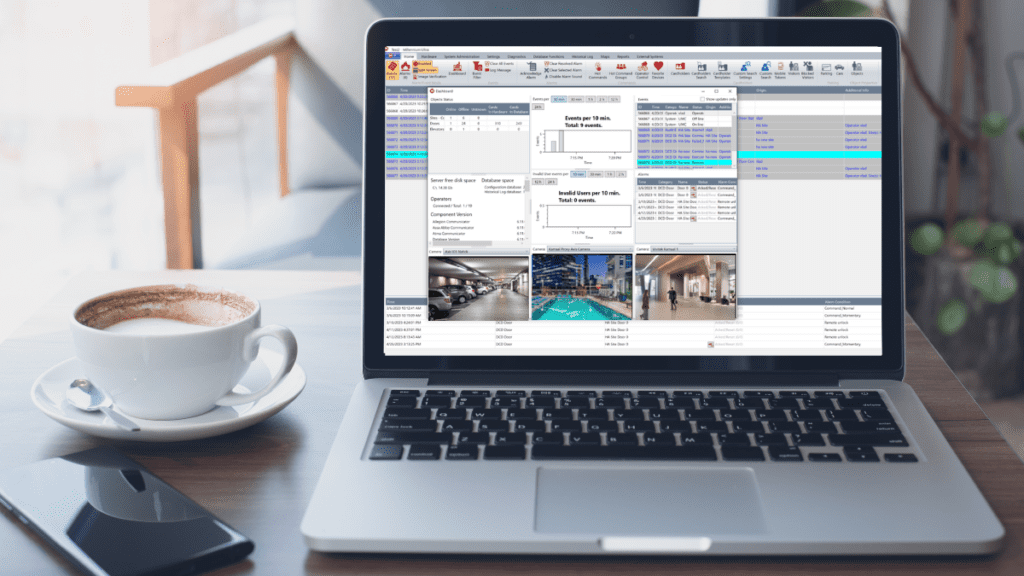
In today’s rapidly evolving world, ensuring the security and safety of our premises has become a paramount concern. Traditional security measures alone may not be enough to address the growing complexities of modern threats. That’s where the integration of video surveillance and access control systems comes into play. By combining these two powerful technologies, organizations can achieve heightened security, improved operational efficiency, and greater peace of mind. In this blog, we will delve into the reasons why integrated video surveillance with access control is not only good but also vital for comprehensive security solutions. Enhanced Situational Awareness: The integration of video surveillance and access control empowers organizations with a holistic view of their premises. By correlating access events with real-time video footage, security personnel can quickly respond to incidents, identify potential risks, and make informed decisions. This enhanced situational awareness enables proactive measures and timely interventions, significantly enhancing overall security levels. Accurate Identity Verification: Access control systems provide a valuable layer of security by restricting entry to authorized personnel. However, the integration with video surveillance adds an extra dimension of identity verification. By capturing video footage of individuals at access points, organizations can verify the authenticity of credentials and prevent unauthorized entry attempts. This powerful combination helps mitigate security breaches and strengthens access control effectiveness. Forensic Investigation and Evidence: In the unfortunate event of security incidents or breaches, the integration of video surveillance and access control plays a crucial role in forensic investigations. By correlating access events with recorded video footage, investigators gain valuable evidence for identifying culprits, understanding the sequence of events, and strengthening legal proceedings. This seamless integration simplifies the retrieval and analysis of relevant footage, saving time and resources during investigations. Operational Efficiency and Streamlined Processes: Beyond security benefits, the integration of video surveillance and access control systems brings notable operational advantages. Integrated systems allow for centralized management, eliminating the need for separate platforms and reducing complexity. Administrators can conveniently configure access permissions, monitor live video feeds, and generate comprehensive reports, all from a unified interface. This streamlined approach simplifies administrative tasks, enhances efficiency, and optimizes resource allocation. Scalability and Future-Proofing: The integration of video surveillance and access control systems offers scalability and future-proofing capabilities. As organizations grow or security requirements evolve, integrated systems can easily accommodate expansions and upgrades. With a flexible and scalable infrastructure, businesses can adapt to changing needs without significant disruptions or costly replacements. This future-proof approach ensures long-term investment value and prepares organizations for future security challenges. Cost-Effective Solution: When it comes to CCTV pricing, our integrated video surveillance and access control system offers exceptional value. Unlike traditional setups that require additional hardware and complex installations, our solution is cloud-based, eliminating the need for extensive infrastructure. With our system, all you need is a camera to capture footage, and everything else is seamlessly managed in the cloud with our Ultra App. This not only simplifies the setup process but also reduces costs, making it an affordable and convenient choice for organizations of all sizes. The integration of video surveillance and access control systems is a game-changer in modern security solutions. It provides a comprehensive and proactive approach to safeguarding premises, assets, and personnel. By combining real-time access control data with video intelligence, organizations gain unparalleled situational awareness, accurate identity verification, and streamlined operations. Moreover, the integration offers valuable forensic capabilities, operational efficiency, and future scalability. Embracing this powerful integration is not only good but imperative for organizations seeking robust and effective security solutions. Get in touch with us today to seize the full potential of video surveillance integration, bolstering your security stance and safeguarding what truly matters.