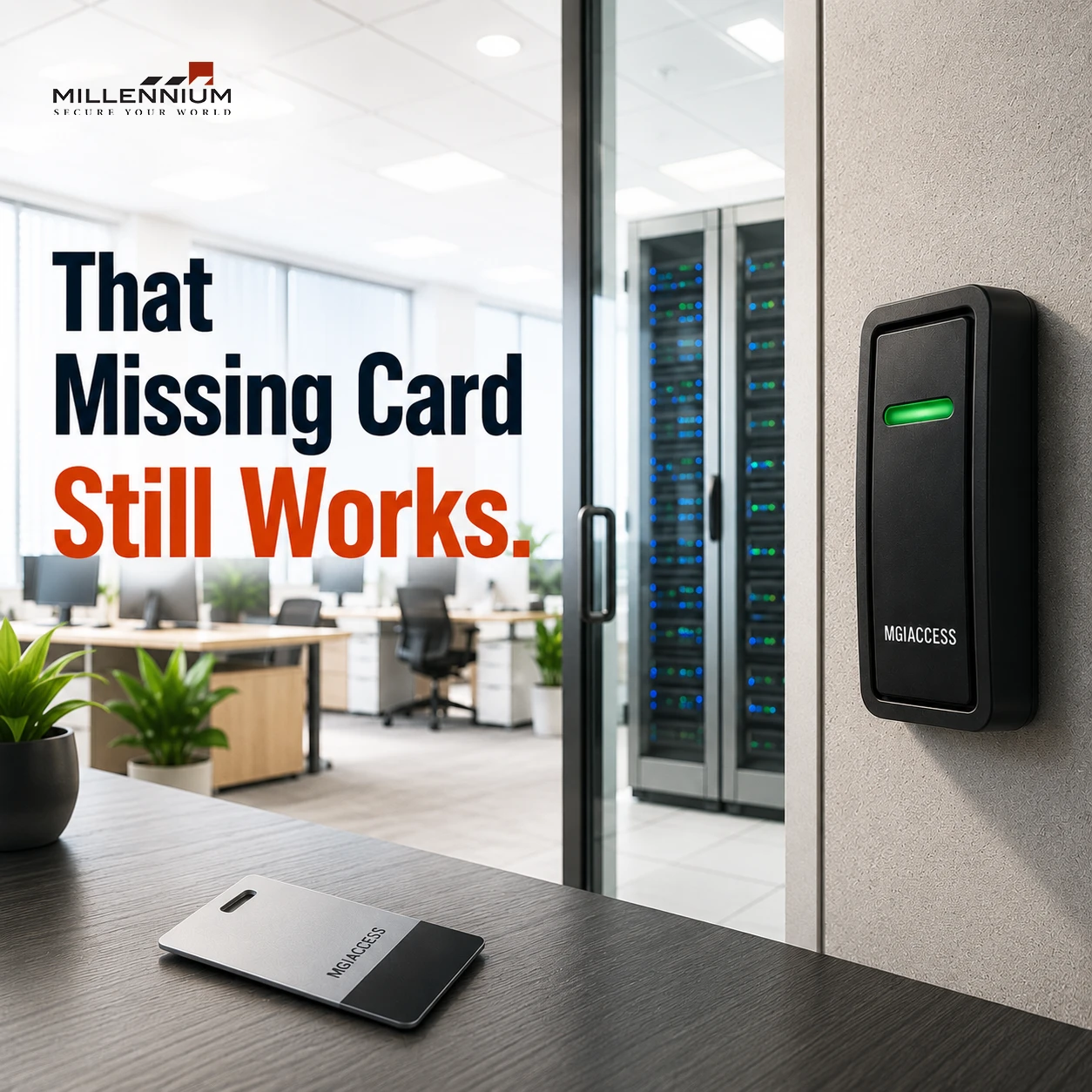
Lost access cards are often treated as a simple admin issue: replace the card, deactivate the old one, move on. But for IT directors, facility managers, commercial property owners, CRE property managers, and security operations teams, a missing badge is really a physical security event.
A lost card can create a window of unauthorized access, weaken auditability, and add recurring administrative work. In environments with multiple doors, tenant groups, visitors, contractors, and shift-based staff, those risks compound quickly. Industry guidance from NIST also reinforces the basic principle that physical access devices must be controlled and revoked when lost or compromised. (nist-sp-800-53-r5.bsafes.com)
If your organization still relies heavily on physical badges, the question is not whether cards get lost. It’s whether your access control program is designed to respond fast enough when they do. Mobile credentials are increasingly positioned as a modern alternative because they can reduce reliance on replaceable plastic cards and use built-in smartphone protections like device passcodes and biometrics.
What makes a lost access card a real security issue?
A lost card is dangerous because it can still be valid until someone notices it is missing and disables it. That delay matters.
Here’s why:
- Unauthorized access risk: anyone who finds the card may be able to attempt entry if the credential has not been revoked.
- Tailgating becomes easier: once one valid credential is in circulation, it can be used to help someone else follow into secured areas. Tailgating is a known physical security risk. (en.wikipedia.org)
- Audit trail gaps: if the credential remains active, access logs may show “authorized” entry tied to the lost card, making investigations harder.
- Operational disruption: security teams, facilities teams, and service desks often have to verify the loss, revoke the credential, reissue access, and update records.
In other words, the lost card is not the problem by itself. The problem is the time between loss and revocation.
Why “just deactivate it later” is not a safe strategy
Many organizations assume a missing card is low risk because it can be disabled eventually. But “eventually” is the wrong standard for physical security.
NIST guidance for physical access control emphasizes controlling physical access devices and changing or revoking access when keys or credentials are lost or compromised. That principle applies directly to access cards and similar devices. (nist-sp-800-53-r5.bsafes.com)
If your process depends on the cardholder realizing the loss immediately, reporting it quickly, and having someone available to process the revocation right away, then you are relying on a chain of perfect behavior. That is not a strong control model.
For enterprise environments, the better question is:
How quickly can we detect, revoke, and replace a lost credential without disrupting normal operations?
Common search-intent questions behind “lost access cards”
When people search for this topic, they are usually trying to solve one of these problems:
1. Is a lost access card a serious security risk?
Yes. A lost card can create unauthorized-entry risk until it is revoked, especially if it is used in a facility with multiple access points or weak reporting procedures. (nist-sp-800-53-r5.bsafes.com)
2. How do you manage lost badge incidents?
The standard response is to report the loss, verify the user, deactivate the credential, and reissue access. Many physical security policies explicitly call for revocation of lost or stolen badges. (help.drata.com)
3. What is a better alternative to physical access cards?
Mobile credentials are a common modern option. They reduce card replacement, can improve convenience, and leverage smartphone security features rather than relying only on a standalone card.
4. How can enterprise teams reduce access card replacement costs?
By tightening lifecycle management, reducing dependence on plastic cards, and moving toward credential models that are easier to issue, update, and revoke.
The hidden costs of lost access cards
The obvious cost is replacement. The less obvious costs are the ones that affect security operations and facilities teams every week.
Administrative overhead
Each lost card can trigger:
- identity verification
- deactivation
- reissuance
- access profile review
- help desk or security ticket handling
That creates operational drag, especially in organizations with large headcounts, multiple buildings, or frequent contractor turnover.
Security policy exceptions
When replacements are slow, teams often create temporary workarounds. Those workarounds can weaken your access policy and create inconsistent enforcement across sites.Poor tenant or employee experience
In commercial real estate and multi-tenant environments, a lost credential can quickly become a service issue. A modern access control program should reduce friction, not add it.Why lost cards expose a broader access control weakness
A lost card is usually a symptom of a larger issue: the organization depends too heavily on a physical credential model that is hard to manage at scale. That model has a few built-in vulnerabilities:- cards can be lost, stolen, or shared
- cards can be cloned depending on the credential technology in use
- users may not report losses immediately
- revocation is only effective if the organization acts fast
- audit trails are only useful if the credential lifecycle is managed correctly
How mobile credentials help reduce the risk
For many enterprise teams, mobile access control is one of the most practical ways to reduce the impact of lost credentials. Because the credential is tied to the user’s phone, it can benefit from protections already built into the device, such as:- PIN or password protection
- fingerprint authentication
- facial recognition
- remote device management policies
Where mobile credentials fit best
Mobile credentials are especially relevant for:- enterprise offices
- corporate campuses
- commercial buildings
- multi-tenant properties
- high-turnover environments
- teams that want fewer help desk tickets and fewer physical credential replacements
Best practices for reducing risk from lost access cards
If you are not ready to eliminate cards entirely, tighten the process around them.1. Make reporting immediate and simple
Employees and tenants should know exactly how and where to report a lost card.2. Revoke access quickly
Do not let credentials remain active while someone “checks later.” Follow a defined revocation workflow. NIST-aligned physical security guidance supports prompt revocation when credentials are lost or compromised. (nist-sp-800-53-r5.bsafes.com)3. Review access rights during reissue
Treat replacement as a chance to confirm whether the person still needs the same access profile.4. Reduce card-sharing culture
If credentials are easy to share, they will be shared. Clear policy and enforcement matter.5. Consider mobile access control
If your pain points include card replacement, admin overhead, and credential lifecycle risk, mobile credentials are worth evaluating.What enterprise teams should evaluate next
Before choosing a path, ask:- How long does it take to disable a lost card today?
- Who approves revocation?
- How many replacement credentials do we issue each month?
- Are we managing cards consistently across all sites?
- Can our current system support mobile credentials without major infrastructure changes?
Conclusion
Lost access cards are more than a nuisance. They are a signal that your physical access control process may be too slow, too manual, or too dependent on replaceable credentials. For enterprise facilities and security teams, the goal is not just to replace cards faster. It is to reduce the security exposure created each time a credential goes missing. That means stronger lifecycle control, faster revocation, and—where it fits—moving toward mobile credentials that are easier to manage and harder to misuse.Ready to Reduce the Risk of Lost Credentials?
If lost access cards are creating security concerns, administrative overhead, or unnecessary replacement costs, it may be time to rethink how credentials are managed across your organization.
Millennium helps organizations modernize access control with solutions that simplify credential management, support mobile access, and provide greater control over who can access your facilities—and when.
Whether you’re managing a single building or multiple sites, our team can help you evaluate options that improve security while reducing operational burden.
Contact us today to learn how Millennium can help strengthen your access control strategy and reduce the risks associated with lost credentials.Millennium is a scalable, hosted, access control platform that services any type of real estate. Our cloud-based solution allows managers and tenants to efficiently manage their physical security from anywhere while enhancing experience and driving profitability.