
Portfolio Convergence: Scaling Unified Security Across Distributed Franchises
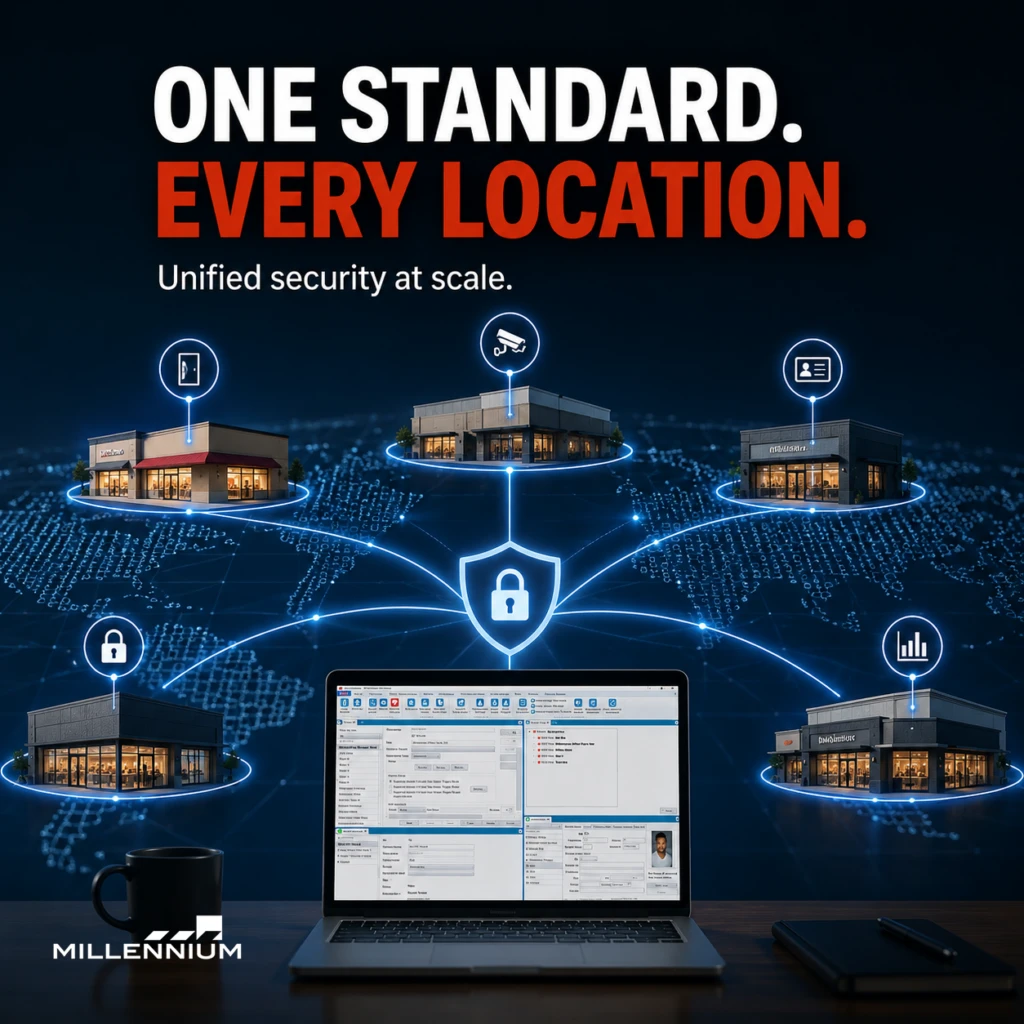
Distributed franchises and multi-site portfolios face a familiar challenge: how do you maintain consistent security when every location operates a little differently? One site may have upgraded access control. Another may still rely on legacy video systems. A third may use local workarounds that were never designed to scale. Over time, that fragmentation creates operational drag, inconsistent policy enforcement, and security blind spots that become harder to manage as the portfolio grows. That is where portfolio convergence comes in. Portfolio convergence is the move from isolated, site-by-site security systems to a unified operating model that supports centralized oversight, standardized policies, and scalable administration across distributed franchises. For IT Directors, Enterprise Facility Managers, Commercial Property Owners, CRE Property Managers, and Enterprise Security Operations teams, this is no longer a nice-to-have. It is the foundation for scalable security operations. What portfolio convergence means in practice At its core, portfolio convergence is about aligning people, policies, and technology across every location in the portfolio. Instead of managing each site as its own security island, your organization defines a common security baseline and applies it across the enterprise. That baseline usually includes: centralized access control policies unified video surveillance management standardized identity and credential workflows consistent alarm and incident response procedures common reporting and audit practices The goal is not to make every property identical. The goal is to make every property manageable within the same security framework. Why fragmented security does not scale Legacy security environments often grow organically. A new site gets its own hardware. A local team selects a different vendor. An acquired property brings in another system. Before long, the portfolio contains a mix of platforms, processes, and access policies that are difficult to govern from the center. That kind of fragmentation creates real operational problems: Inconsistent access policies across properties Limited portfolio-wide visibility into incidents and activity Manual administration for IT and security teams Siloed video and access data that slows investigations Harder onboarding for new sites, tenants, employees, and vendors When security is fragmented, every change takes longer. Every audit takes more effort. And every incident requires more coordination. The case for unified security across distributed franchises A unified security model gives enterprise teams a way to manage multiple sites from one strategic framework while still allowing local operations to function smoothly. That matters because distributed franchises need both control and flexibility. Corporate teams need visibility, consistency, and policy enforcement. Site managers need systems that are practical, repeatable, and easy to operate. Unified security helps bridge that gap by bringing key functions together: 1. Centralized access control Access control becomes easier to govern when policies, credentials, and permissions are managed consistently across the portfolio. That improves accountability and reduces the risk of access drift between locations. 2. Unified video surveillance When video management is standardized, security teams can investigate events faster, compare activity across sites, and maintain a consistent evidence trail. 3. Shared identity and policy logic A converged approach supports role-based access, credential lifecycle management, and policy enforcement tied to organizational standards rather than local preference. 4. Better operational visibility Portfolio-level oversight makes it easier to identify recurring issues, spot anomalies, and allocate resources where they are needed most. Zero trust principles belong in physical security too As organizations modernize, many are applying zero trust thinking to physical security operations as well. At a practical level, that means verifying access rather than assuming trust based on location, legacy permissions, or network proximity. It also means enforcing least privilege, limiting standing access, and maintaining strong auditability. For distributed franchises, that approach is especially valuable because it reduces reliance on site-specific exceptions. Instead of assuming every local environment is equally trusted, enterprise teams can define policy once and apply it consistently. This is particularly important when physical security systems are connected to broader IT infrastructure, identity systems, or cloud-managed platforms. What IT Directors should focus on For IT leaders, portfolio convergence is primarily an architecture and governance issue. The most effective programs start with standardization and interoperability. Key priorities include: identity-based access policies secure credential and account management standardized device onboarding network segmentation where appropriate central logging and audit visibility integration with enterprise identity and security processes The objective is to reduce complexity without losing control. A converged environment should make security easier to manage, not harder. What Enterprise Facility Managers need Facility teams are often responsible for the daily reality of security operations. They need systems that are consistent, intuitive, and resilient across locations. A converged portfolio helps facilities teams by: reducing vendor-specific workflows simplifying site onboarding making procedures easier to train and repeat improving coordination between local and corporate teams supporting faster response to incidents and service issues When systems are standardized, facilities teams spend less time troubleshooting and more time operating. What CRE Property Managers should prioritize For Commercial Real Estate and property management teams, security is about more than protection. It also affects tenant confidence, operational consistency, and asset perception. A fragmented security model can create uneven tenant experiences and make it harder to demonstrate operational maturity across the portfolio. Unified security supports CRE teams by enabling: consistent access policies clearer incident response procedures stronger portfolio oversight better accountability for vendors, contractors, and visitors a more predictable experience across properties That consistency matters when your portfolio includes multiple asset types, multiple stakeholders, and multiple operational models. What Enterprise Security Operations teams gain Security operations teams need speed, context, and visibility. When access events, alarms, and video are disconnected, investigating an incident can become a time-consuming manual process. When those systems are unified, operators can move faster and work with better context. A converged security model can support: faster incident correlation better event investigation reduced alert fragmentation clearer escalation paths stronger audit readiness In a distributed portfolio, those gains compound quickly. Common mistakes organizations make during convergence Portfolio convergence is not just a technology project. It is a governance and operational change effort. Common mistakes include: Treating every site as a special case Too many