
Identity Convergence: Syncing Access Control with Active Directory
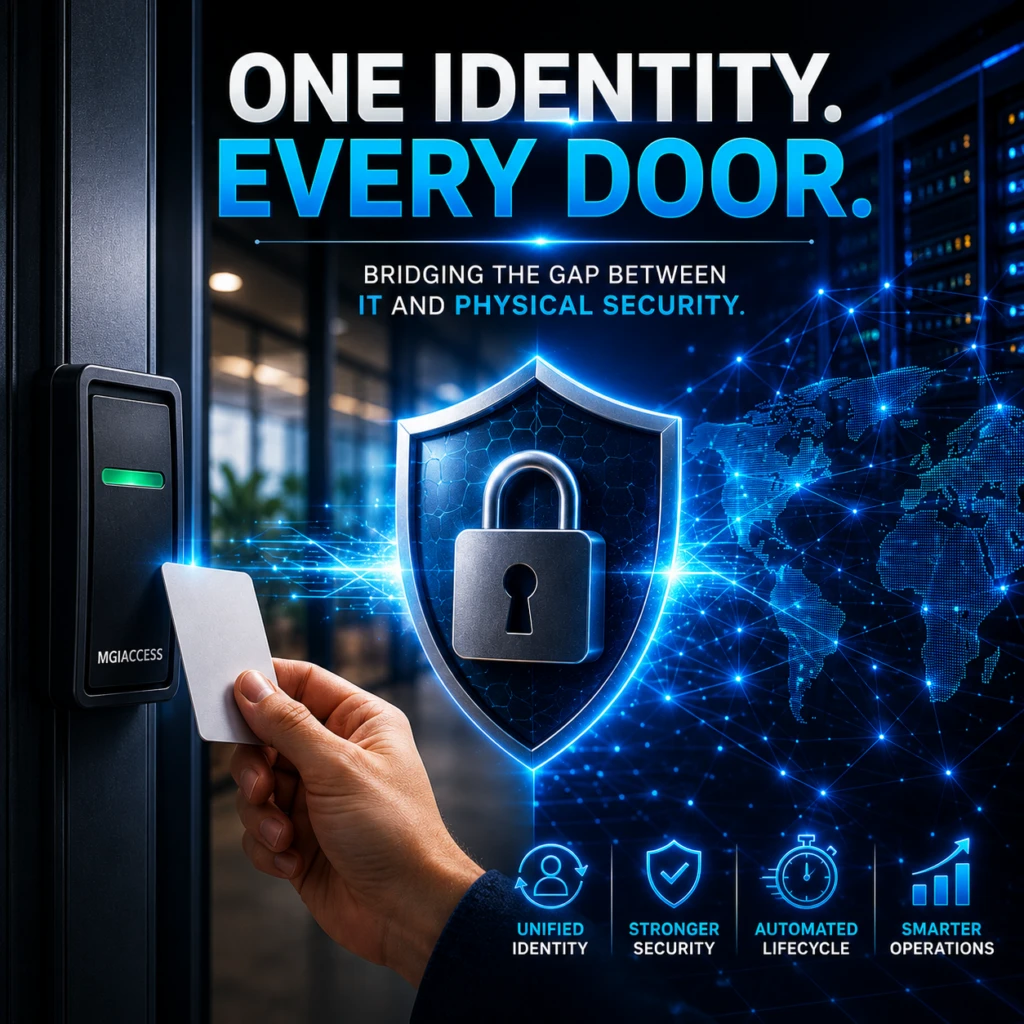
Enterprise security breaks down fastest at the handoff points: IT owns identity, facilities owns doors, and security ops owns risk. When those systems do not share a common identity foundation, you get duplicate records, delayed deprovisioning, inconsistent access decisions, and too much manual work during onboarding, offboarding, and role changes. That is the core problem identity convergence solves. By syncing access control with Active Directory and enterprise identity management systems, organizations can create a more unified identity layer across digital and physical environments. Instead of managing people in disconnected silos, IT and security teams can align identity lifecycle events, enforce policy more consistently, and reduce the gap between who someone is and what they can access. Why identity convergence matters now Modern enterprises are moving toward identity-centric security models. NIST’s Zero Trust guidance emphasizes identity as a key control point rather than relying only on network location or perimeter trust. In parallel, modern identity management platforms support authentication, provisioning, and directory integration through widely adopted standards such as SAML, OIDC, and SCIM. (csrc.nist.gov) For IT Directors, Enterprise Facility Managers, CRE Property Managers, and Enterprise Security Operations teams, that means the old separation between cyber and physical access is no longer sustainable. If a worker leaves, changes departments, or loses privileges, the identity source of truth should update both digital access and physical access workflows as close to real time as the architecture allows. Identity management platforms that support SCIM can automate user and group lifecycle actions, while Active Directory integration helps centralize identity management across on-premises and connected environments. What “syncing access control with Active Directory” actually means At a practical level, identity convergence means your identity provider, directory, and access control ecosystem work together through standards and integrations rather than manual exports and spreadsheet-driven administration. A typical model looks like this: Active Directory remains the authoritative directory for many legacy and on-premises systems. Microsoft documents AD’s core role in directory services and common authentication protocols in enterprise environments. (learn.microsoft.com) Enterprise identity management platforms provide centralized authentication, federation, and lifecycle orchestration across applications and directories. SCIM automates user and group provisioning, updates, and deactivation between identity providers and connected applications. SAML and OIDC provide standardized federated authentication for modern applications and services. In a converged environment, a joiner-mover-leaver event in HR or an identity management system can trigger downstream changes that update access more consistently across systems. That is the operational value of identity convergence: fewer manual handoffs, fewer orphaned accounts, and a cleaner chain of trust. Identity convergence reduces the cyber-physical gap One of the biggest risks in enterprise security is the gap between digital identity and physical access. A user may be disabled in one system while still active in another. A contractor may still appear in a badge workflow after their project ends. A role change may update application access but not physical permissions. That gap creates operational risk. Identity management platforms support centralized lifecycle management across connected systems, while Microsoft’s directory and authentication documentation reinforces that Active Directory remains foundational in many enterprise environments. (learn.microsoft.com) For security teams, the goal is not just convenience. It is consistency. Identity convergence helps ensure that access decisions are based on current status, not stale records. Why Active Directory still matters in modern access control Active Directory is still deeply embedded in enterprise infrastructure. Microsoft describes Active Directory as the directory many organizations use for core services and authentication. That matters because many access control environments still depend on legacy systems, on-premises services, or hybrid deployments. If your physical security stack, badge system, or facility workflow still depends on AD-linked identities, then identity convergence should respect that reality rather than trying to ignore it. The best approach is usually hybrid: keep Active Directory where it is still authoritative, connect downstream systems through supported integrations and standardized identity management practices, maintain consistent identity information across physical and digital environments. The role of enterprise identity management in unified access control Modern identity management platforms support standard protocols and identity integration patterns that are central to modern enterprise identity architecture. These platforms commonly support authentication, provisioning, directory synchronization, and federation across connected applications and services. That makes enterprise identity management useful for: authentication, provisioning, deprovisioning, directory synchronization, and federation across connected applications and services. For enterprise buyers, this is especially important when access control touches both IT systems and physical environments. You need a model that can scale across departments, locations, and vendors without multiplying administrative burden. Standard protocols make integration more secure and more scalable If you are building or evaluating an identity convergence strategy, the protocol layer matters. SCIM for provisioning and lifecycle automation SCIM is an open standard for exchanging identity data and automating user and group lifecycle operations between identity providers and connected applications. Microsoft Entra documentation similarly describes SCIM as a standardized way to synchronize user profiles and group data. SAML for federated enterprise sign-in SAML is a long-standing enterprise federation standard used to support secure authentication between identity providers and enterprise applications. OIDC for modern authentication OpenID Connect builds on OAuth 2.0 and is widely used for modern application authentication and single sign-on. The advantage of using standards is straightforward: you reduce custom connector complexity, improve portability, and make security architecture easier to maintain over time. What enterprise facility managers need from identity convergence Facility managers are often forced to operate in a world where physical access is managed separately from digital identity. That creates friction during: onboarding, role changes, temporary access needs, contractor access, after-hours access, and offboarding. Identity convergence helps facility teams work from the same lifecycle events that IT already uses. Instead of waiting on manual ticketing or email approvals, the organization can align identity status with access workflows more systematically. That is especially useful in multi-site commercial real estate environments, where inconsistent access rules across buildings or tenants can create both operational inefficiency and security exposure. What IT Directors and security teams should prioritize If you are responsible for the architecture, focus